
image source: http://defensetech.org
| IBM (i2)
(current)
Scale: Commercial, International
Role: Strategic Advisor, Defence & National Security
Mission: To provide independent advice on UK Defence & National Security organisation & requirements, and current operational context & trends.
Challenges: Keeping abreast of requirements for ongoing operations in Afghanistan and the emerging Cyber security threat. Maintaining liaison with NATO, MOD and Defence companies, arranging briefings and professional seminars.
Bottom Line: Ongoing |
| |
| THE CULTURAL EXPERIENCE
(current)
Scale: National leisure business
Role: Director
Associates: Board of TCE
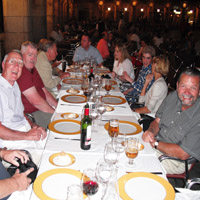
Mission: To develop and diversify TCE's activities in the historical and cultural tour business.
Challenges: Growing business in the busy leisure sector at a time of recession.
Bottom Line: Business is expanding year on year |
| |
 | ROYAL SIGNALS TRUSTEE LIMITED
(current)
Scale: National charity
Role: Chairman
Associates: A board of senior management, commercial and financial experts
Mission: To manage the £8M investment portfolio of the Royal Signals Benevolent Fund and act as guarantor of the Royal Signals Museum Ltd and Royal Signals Yacht Club Ltd.
Challenges: Investing for growth in a period of recession and managing grants for increasing welfare, professional development, sports and adventurous activities.
Bottom Line: Fund is growing, all charitable objects being achieved.
|
| |

| CHALKE VALLEY STORES
(current)
Scale: Local business start-up
Role: Chairman
Associates: Professional advisors and volunteers.
Mission: To set up a commercial centre consisting of rural stores & farmers market, post office, cafe, information centre, offices and meeting rooms.
Challenges: Planning & design, capital fund-raising, project management, retail management, stakeholder management.
Bottom Line: Ongoing. |
| |

| GURKHA WELFARE TRUST (WESSEX & SOUTH)
(current)
Scale: Regional pro bono
Role: Chairman
Associates: Local volunteers
Mission: To raise funds for Gurkha welfare through organising charity events.
Challenges: Managing and motivating volunteers. Fund-raising in a time of recession.
Bottom Line: A full programme of fund-raising and awareness events achieved, leading to healthy annual income. |

| EMERGENCY SERVICES COMMUNICATIONS NETWORK
(2006-10)
Scale:National
Role: Programme Manager
Associates: Project team of up to 90 x Mott McDonald management consultants & engineers; Fire & Rescue Service (FRS) secondees; and civil servants from Communities & Local Government.
Mission: To plan and implement the rollout (by Airwave Ltd) of the first, nationwide resilient digital command, control & communications network (£450M) for the Fire & Rescue Service and integrating it with equivalent networks used by Police and Ambulance Services.
Challenges: Project management and technical planning. Change management & stakeholder management: dealing with c.40 separate Fire & Rescue Services and their associated National Government and Local Authorities in England, Scotland & Wales.
Bottom Line: The network rolled out £70M under budget and is now being used successfully by all ‘Blue Light’ Emergency Services. |
| |
| DEFENCE INFORMATION MANAGEMENT STUDY
(2005-05)
Scale:National
Role:Study Leader
Associates:Team of 5 x subject matter experts.
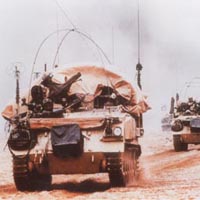
Mission: To audit information management within MOD and across the Armed Forces, and recommend more effective and standardised organisation & practice.
Challenges: Achieving oversight of the use of IT across the whole spectrum of Defence activity; winning the confidence of those concerned at both command (CEO) and information management (CIO) level; and persuading people to change, adapt and standardise management practice in order to harness the full potential of emerging IT.
Bottom Line: All significant recommendations of ‘The Truluck Study’ have since been implemented, laying foundations for the Defence Information Infrastructure (DII) and MOD’s ‘Information Superiority’ concept. |
| |

| MANAGEMENT CONSULTANCY ASSIGNMENTS
(2003-05)
Scale: Various
Role: Individual management consultant
Mission: To provide management and/or military advice to companies engaged in Defence & Security business.
Challenges: Clients included DSTL, IBM, Lucent Technologies, Bell Labs and Blue Sky.
Bottom Line: All assignments completed satisfactorily. |
| |

| LONDON CRIMINAL JUSTICE BOARD
(2002-03)
Scale:Local Government
Role: Chair
Associates: Cross-section of leaders of London Local Government, Judicial, Crown Prosecution, Police, Prison, Social & Welfare services.
Mission: To integrate the activities of all agencies involved in tackling and reducing crime in London.
Challenges: Analysing causes of crime, the most effective response, and coordinating action across a wide range of stakeholders
Bottom Line: Set up the Board and its working practices and achieved significant success in breaking down barriers between the disparate organisations concerned. |
| |
| GREATER LONDON MAGISTRATES COURTS AUTHORITY
(2001-03)
Scale:Local Authority
Role: Chief Executive
Associates: Team of c. 90 officials working for the Greater London Magistrates Courts Authority (GLMCA).
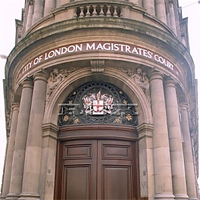
Mission:To integrate the 5000 staff and 40 separate Petty Session Areas and associated Courthouses in London into a single Courts Authority.
Challenges: Achieving organisational and cultural change in an area steeped in tradition and local autonomy. Rationalising the London courthouse estate plan.
Bottom Line: Successfully formed the new Local Authority organisation, achieving savings in overheads and improvements in operational efficiency. GLMCA model was then used as basis of the National Courts Service which subsumed it.
|
| |

| NATO RE-ORGANISATION
(1998-2000)
Scale International (Europe)
Role: Executive Assistant Chief of Staff (Director General)
Associates: International team of 12 x military officers and NATO officials based at NATO Supreme Headquarters Allied Powers Europe (SHAPE) in Mons, Belgium.
Mission: To plan & implement NATO’s the new, International Peacekeeping, command structure and associated communications & information network.
Challenges: Negotiating and implementing change through careful stakeholder engagement and management across 19 x member nations.
Bottom Line: New organisation implemented ahead of time and within budget – and tested successfully on humanitarian operations in the Balkans. |
| |
| NATIONAL AIRCRAFT PROGRAMME
(1997-98)
Scale:National
Role:Programme Director
Associates: Team of 6 x military subject matter experts.
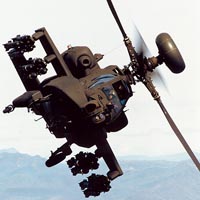
Mission: To coordinate all aspects of the introduction into operational service of the fleet of 68 x Apache Attack Helicopters being procured from USA and fitted out with UK weapons and technology.
Challenges: Liaison between US and UK companies involved – especially Augusta Westland Helicopters. Coordinating the activities of all UK stakeholders across Government, industry and the Armed Forces and ‘troubleshooting’ where necessary. Producing a training and implementation plan.
Bottom Line: UK Apache is flying in Afghanistan and other operational theatres with conspicuous success. |
| |
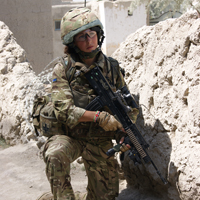
| UNITED KINGDOM LAND FORCES
(1994-96)
Scale:National
Role: Director Staff Operations
Associates: Coordination of the work of the staff teams responsible for British Army operational Organisation & Deployment; Planning & Budget; and Public Relations.
Mission:To ensure the internal efficiency of the British Army’s operational headquarters and account for its running costs.
Challenges: Included managing the successful merger of UKLF and the British Army of the Rhine, and the deployment of an unprecedented (at that time) number of troops on overseas operations.
Bottom Line: Achieved significant improvements to efficiency and running costs, despite concurrent intense operational activity. |
| |
.jpg)
| ROYAL SCHOOL OF SIGNALS
(1990-93)
Scale: National
Role: Commandant (Chief Executive)
Associates: Mixed team of military and civilian teaching and estate management staff.
Mission: To implement research & development and specialist training in military command, control, communications & information (C3I) and electronic warfare (EW) systems.
Challenges: Keeping abreast of, and harnessing, concurrent developments in IT. Administering and resourcing the associated North Dorset garrison of c. 5000 soldiers, sailors, airmen, civilians and families – and real estate – in Blandford and West Moors.
Bottom Line: Developed Blandford into the Defence IT ‘centre of excellence’. |